Hormones and Mental Health
Hormones play a powerful role in both physical and emotional well-being. For many women and people who menstruate, changes in mood, energy, and focus often follow a monthly rhythm tied to the menstrual cycle. While it’s normal to experience shifts throughout the month, some hormonal changes can significantly affect mental health—contributing to anxiety, irritability, low mood, or even depression.
At Tranquility Psychiatry, we help patients understand how hormonal fluctuations interact with the brain and emotions. By learning what’s happening in your body, you can better recognize patterns, reduce self-blame, and take proactive steps to care for your mental health.
The Four Phases of the Menstrual Cycle—and How They Affect Mood
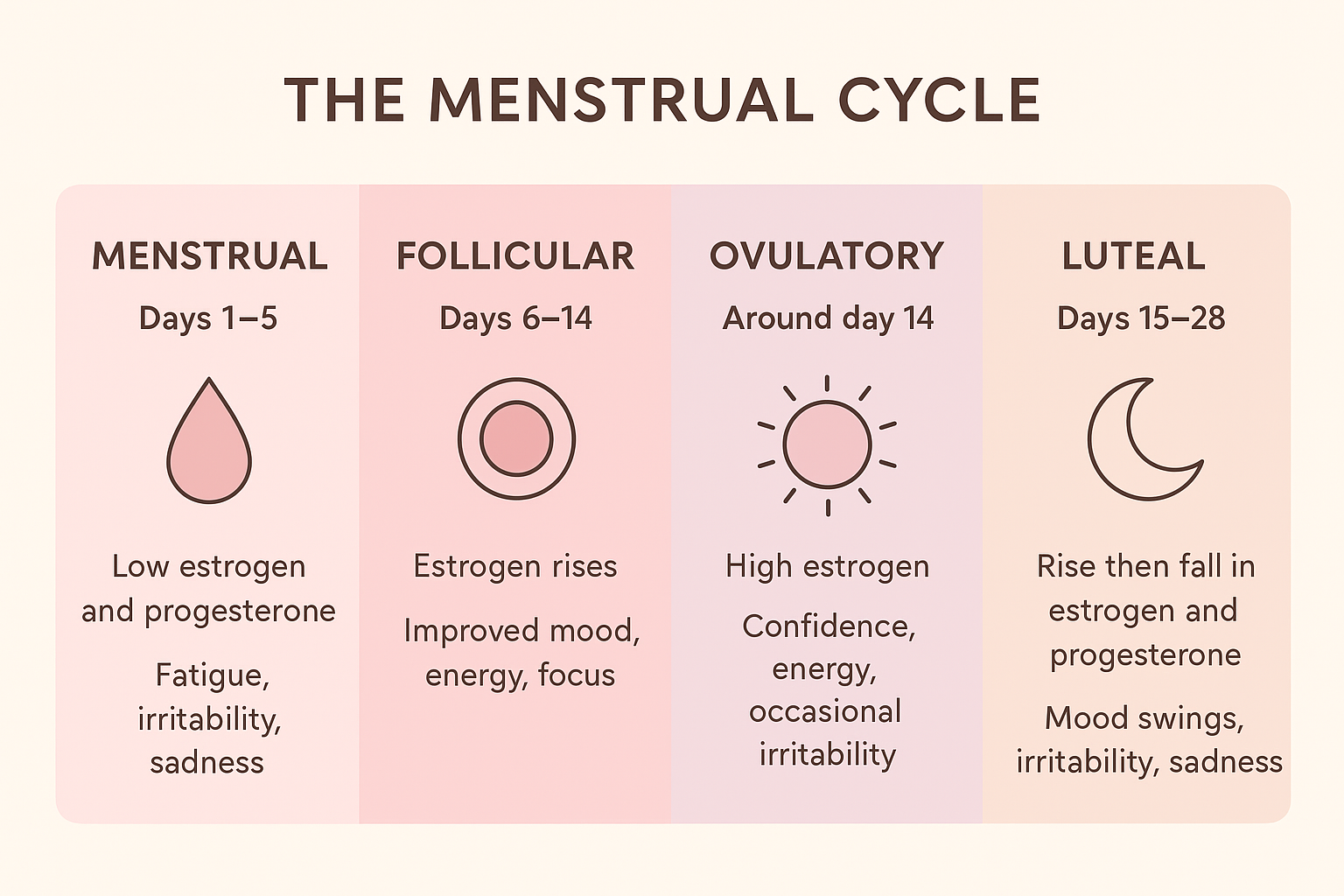
The menstrual cycle typically lasts around 28 days, though it can vary from person to person. It’s divided into these four key phases.
1. Menstrual Phase (Days 1–5): The Reset
This phase begins when bleeding starts. Levels of estrogen and progesterone drop sharply, which can lead to fatigue, irritability, and sadness. Many people describe feeling physically drained or emotionally sensitive during this time.
Mental Health Impact:
Lower mood and motivation due to falling hormone levels
Increased fatigue and sensitivity to stress
Desire for solitude and rest
Supportive Tips:
Prioritize sleep and gentle self-care
Eat iron-rich foods (like leafy greens or lentils) to support energy
Be kind to yourself—rest is productive, too
2. Follicular Phase (Days 6–14): The Rebuild
After menstruation ends, estrogen levels begin to rise as the body prepares to release an egg. This increase in estrogen often brings a boost in mood, energy, and focus. Serotonin—the “feel-good” neurotransmitter—also rises during this phase.
Mental Health Impact:
Improved mood and motivation
Greater confidence and creativity
More social and optimistic outlook
Supportive Tips:
Take advantage of higher energy for exercise and social activities
Focus on productivity and goal-setting
Practice mindfulness to sustain the positive momentum
3. Ovulatory Phase (Around Day 14): The Peak
Ovulation occurs when an egg is released. Estrogen levels peak, and many people feel their best—energetic, outgoing, and mentally sharp. However, some may also experience anxiety or tension from hormonal surges.
Mental Health Impact:
Increased confidence and focus
Occasional irritability or emotional intensity due to hormonal spikes
Supportive Tips:
Channel high energy into creative or social activities
Stay hydrated and maintain balanced meals to prevent mood swings
Keep awareness of emotional sensitivity—especially if you’re prone to anxiety
4. Luteal Phase (Days 15–28): The Dip Before the Reset
After ovulation, progesterone rises while estrogen fluctuates. This can lead to common premenstrual symptoms like bloating, fatigue, or mood changes. For some, the drop in hormones before menstruation can trigger Premenstrual Syndrome (PMS) or, in more severe cases, Premenstrual Dysphoric Disorder (PMDD)—a condition involving significant mood symptoms, irritability, and depression in the luteal phase.
Mental Health Impact:
Mood swings, irritability, and anxiety
Sadness, brain fog, or loss of interest
Heightened emotional sensitivity
Supportive Tips:
Track your cycle to anticipate mood changes
Practice grounding or relaxation techniques
Seek professional help if symptoms become severe or interfere with daily life
When Hormones and Mental Health Collide: PMS vs. PMDD
Most people experience mild PMS symptoms before their period—like irritability or fatigue—but PMDD (Premenstrual Dysphoric Disorder) is a more intense form that can deeply impact mental health.
PMDD symptoms may include:
Significant depression, hopelessness, or suicidal thoughts
Severe anxiety, anger, or mood swings
Difficulty concentrating or sleeping
Overwhelming emotions or intrusive thoughts
If these symptoms are persistent and disruptive, it’s important to seek professional help. PMDD is treatable—with options including lifestyle strategies, therapy, hormonal regulation, and, in some cases, medication.
Supporting Mental Health Throughout the Cycle
Understanding your cycle gives you power. Once you recognize your patterns, you can plan self-care, work, and social commitments around them.
Helpful Strategies:
Track your cycle: Apps or journals can help identify emotional patterns and predict tough days.
Prioritize sleep and nutrition: Consistent rest and balanced meals support stable mood and energy.
Stay active: Exercise boosts endorphins, reduces stress, and can ease PMS symptoms.
Practice mindfulness: Deep breathing, meditation, or journaling can calm mood fluctuations.
Seek professional support: A psychiatrist or therapist can help manage hormonal mood changes, especially if symptoms are severe.
When to Seek Help
If your mood symptoms regularly interfere with work, relationships, or self-esteem, it’s time to reach out. You do not have to “just deal with it.” Hormonal mood changes are real, valid, and treatable.
At Tranquility Psychiatry, we offer compassionate, evidence-based care to help you understand and manage the mental health effects of hormonal fluctuations. Whether through therapy, medication, or integrative strategies, we’ll help you find balance—throughout your cycle and beyond.
Schedule an appointment to explore personalized care for your hormonal and emotional well-being.